The Macpheadris Murals
Introduction
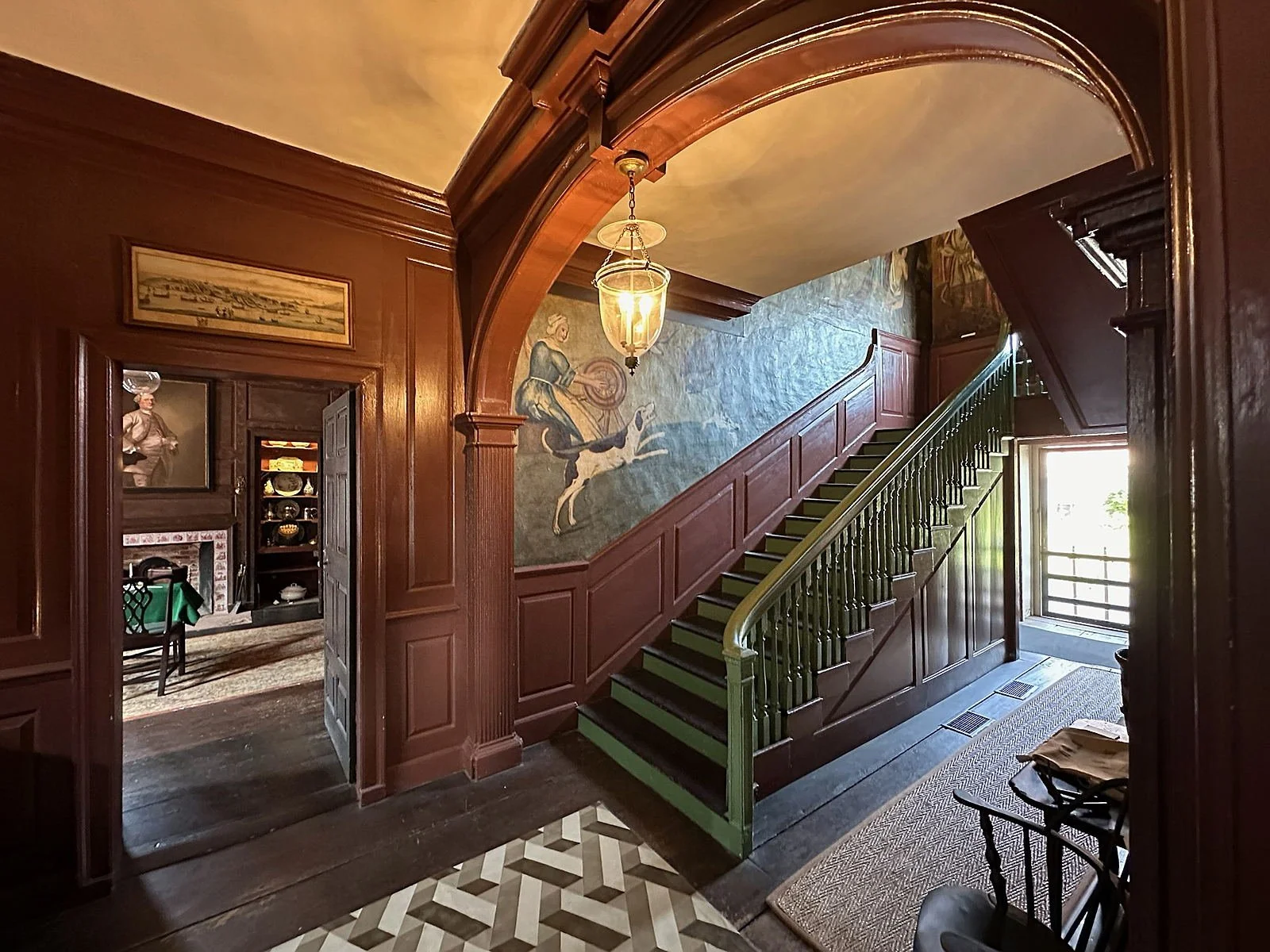
The Macpheadris Murals in the Warner House are one of the most uniquely impressive and dramatic features of the house. Painted c.1718, the four murals are considered the earliest extant British American wall paintings in America, making the Warner House a truly one-of-a-kind visit.
Archibald Macpheadris had the murals painted shortly after the house's construction, 1716-1718. Similar to the nuances of modern social media, an early-18th-century visitor might have understood the subject material and significance of the murals. The modern visitor is left with a more mysterious and open-ended interpretation. The scenes portrayed in the murals likely referred to Macpheadris' years in Ireland and his new adult life as an international merchant and his home in the New Hampshire. Since 2021, a dedicated volunteer named Dave Pepson, has enthusiastically researched these murals and Macpheadris himself. Dave has developed a theory that connects all the murals together and helps us better understand both the art left behind and the man behind it all. It’s possible that Macpheadris had the murals painted with the unifying theme: Tributes of Honor and Gratitude.
The Four Kings
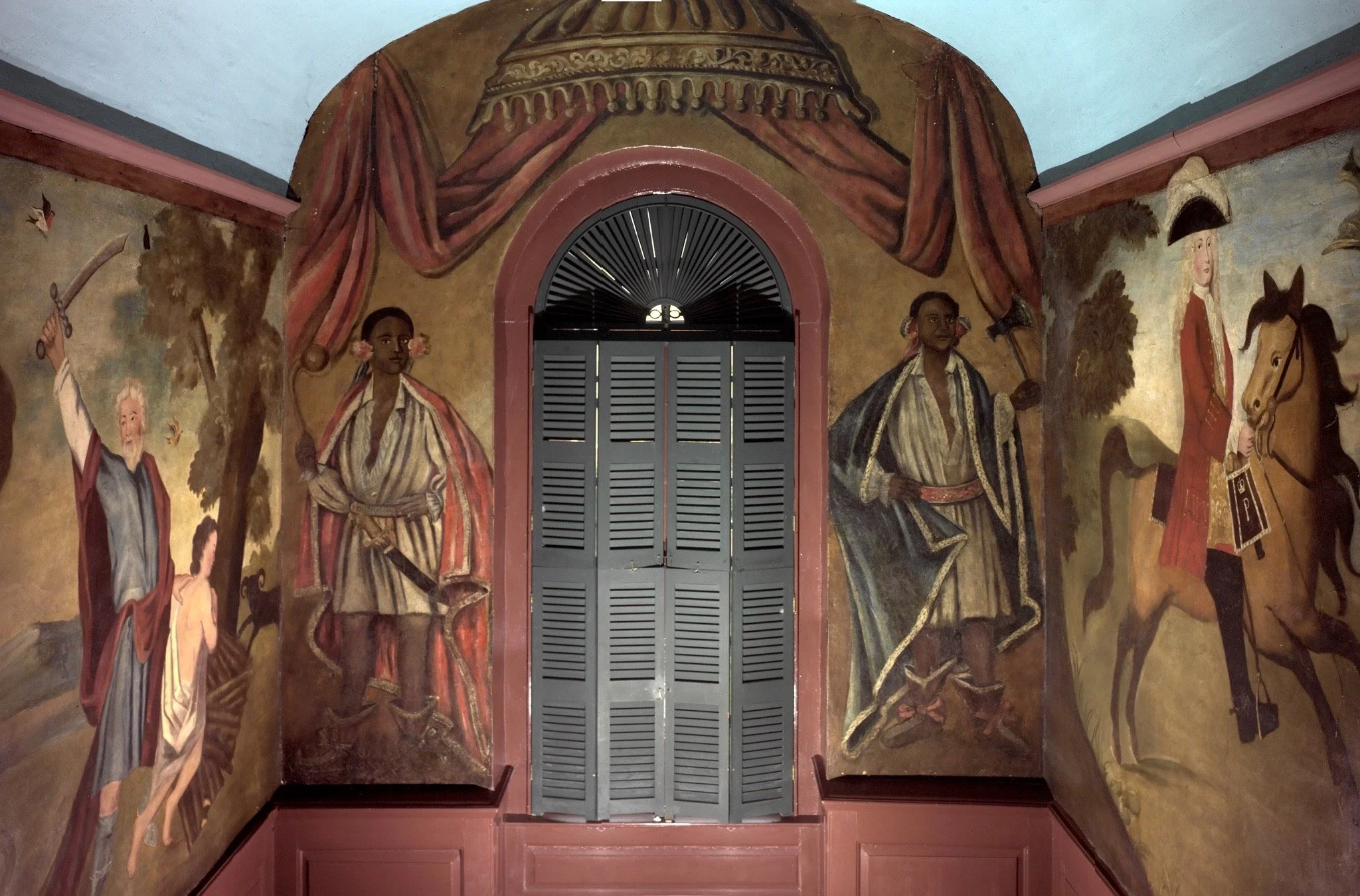
As they were called historically, the Four Kings were instrumental in winning the Queen Anne War (1702-1713), which officially ended with the signing of the Treaty of Portsmouth in 1713 (Benning Wentworth, future Royal Governor of NH, future brother-in-law of Macpheadris, and eventually an occupant of the house, was a signer). As ambassadors from the Iroquois Confederacy (Haudenosaunee) and Mohican tribes, five Indigenous men went to London on the last day of February in 1710, on a mission to meet Queen Anne, organized by Pieter Schuyler. They left from Boston with other New England merchants on board. One of the men died in-route. Their goal was to increase English support for the war against the French and their native allies – which affected both the colonists and the Indigenous Peoples throughout the northern colonies and Canada.
Macphaedris was recorded being in Boston in 1709, so he was probably aware of the trip. In fact, he was at the Green Dragon Tavern a few days after the Native Americans left. The four men were a huge hit in London, with crowds flooding them wherever they went. When they met the Queen, she was so entranced that she ordered more men and arms to be sent to the North American Colonies. She called the men Kings and treated them as such, giving each a red cloak edged in gold, which are depicted in John Verelst’s portraits, painted during their visit. Mezzotints were made from the portraits and sold quickly both in England and in the American Colonies. It is clear the murals’ artist, probably Nehamiah Partridge, used the Verelst prints as reference for his depictions on the walls of the Warner House, adding his own flourishes.
Sa Ga Yeath Qua Pieth Tow (King of Maquas) (Peter Brant)
Tee Yee Ho Ga Row (Hendrick Tejonihokarawa) (King Hendrick)
Etow Oh Koam (Nicholas)*
Ho Nee Yeath Taw No Row (King of Canajoharie) (John of Canajoharie)*
* The two men depicted in the murals.
The extra military support allowed the British Colonist to defeat the French, end the blockade of Boston – and more importantly to us and Macpheadris, allowed the port of Portsmouth to thrive. Macpheadris moved to Portsmouth and was here by 1715 when he’s noted to have owned a lion cub and bought the land on which he had this grand house built. While we don’t know for sure that Macpheadris had a relationship with any of the Four Kings, he was in their proximity and certainly benefited from their actions.
The Side Murals
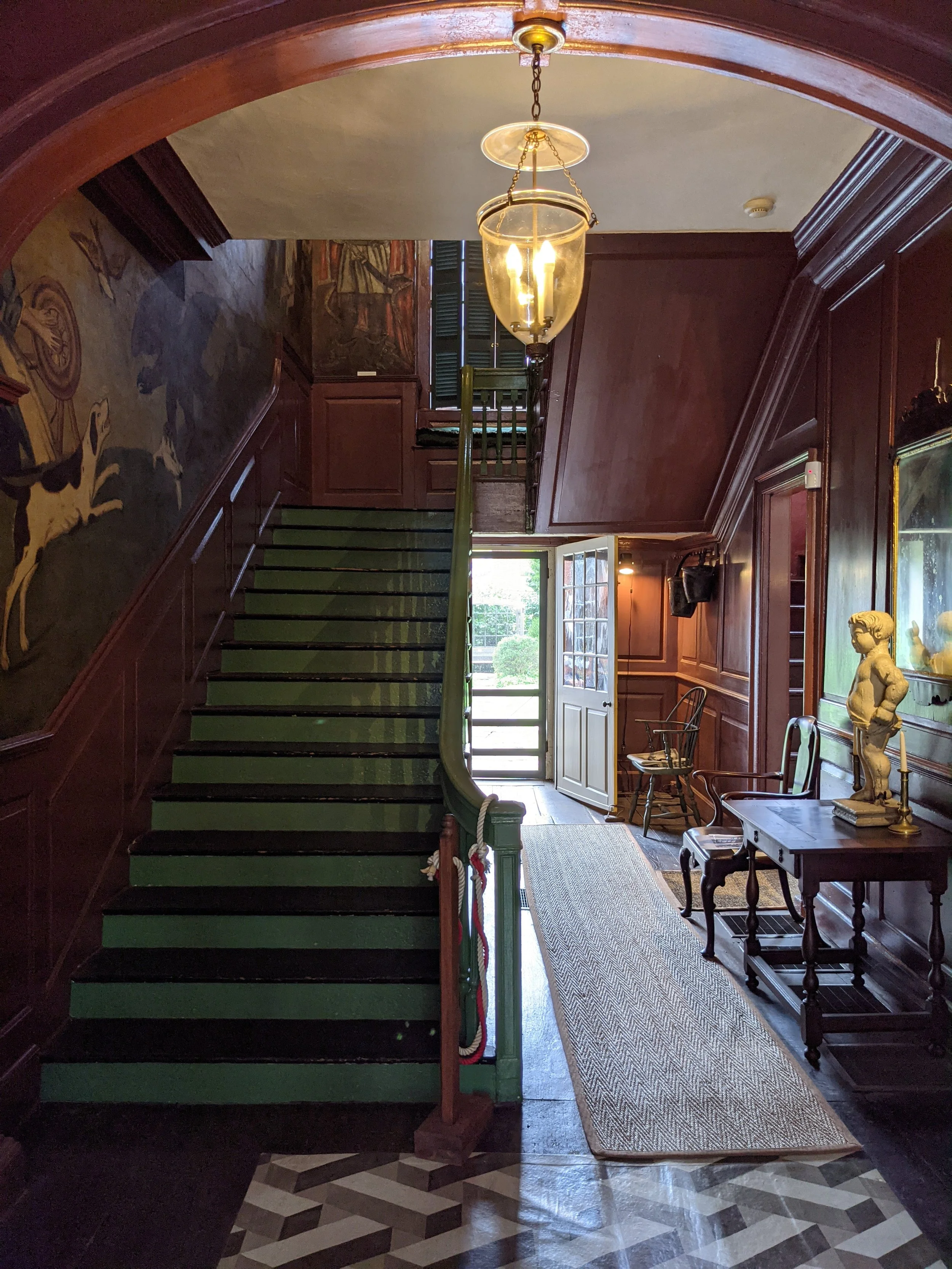
Sometime after Macpheadris' death in 1729, the side murals were covered with wallpaper. Why they were covered is unclear. Possibly the murals’ significances no longer reflected the views or the decorative taste of the new occupants of the Warner House. Interestingly, the two Mohawk sachems on the landing were never covered with wallpaper and have always been on view. By the 19th century, the very existence of the side murals was unknown by descendants who had lived their entire life in the Warner House. In 1853, Sherburne grandchildren were playing on the stairs and a child pulled at the peeling wallpaper, making a remarkable discovery. Under several layers of wallpaper, the child uncovered a horse's hoof! The family had the rest of the wallpaper removed and the side murals have been on view ever since. Of note, flying through most of the murals are several different birds, a welcoming sign for a sea captain like Macpheadris.
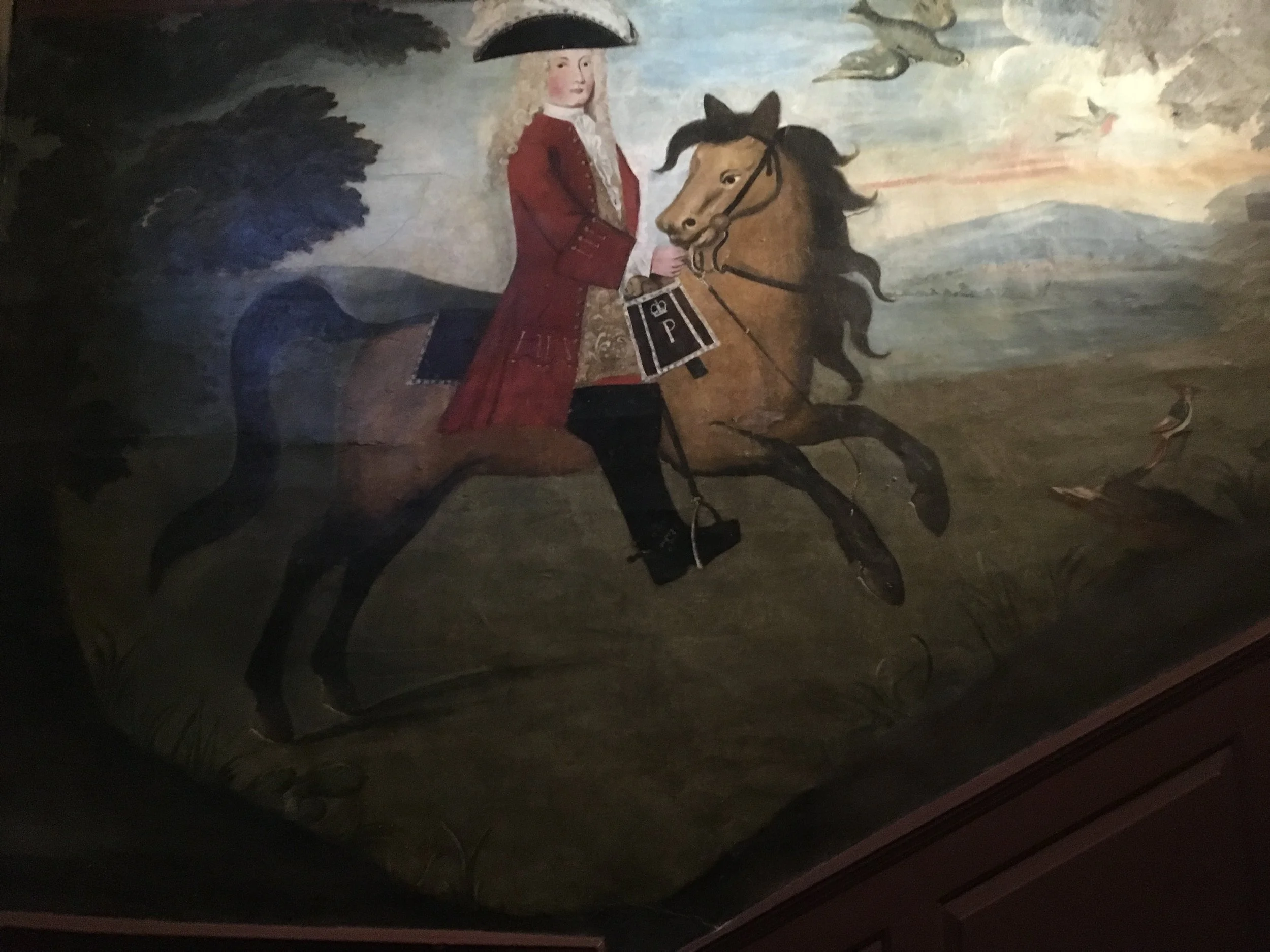
Man on Horse
As a boy, Macpheadris and his family were trapped during the Siege of Derry in 1689, a 105-day military conflict, the longest siege in British and Irish history, and a major event in the Williamite War in Ireland. During what must have been a truly terrible time, Archibald and his two brothers survived while they lost their father and grandfather in the battle. Macpheadris, while devastated to lose key members of his family, must have been grateful that he and his brothers survived. The city’s defensive wall was shut against King James II’s Catholic forces and continued until King William III of Orange’s Protestant relief fleet broke through a blockade on the River Foyle, rescuing those trapped within the city’s defensive walls. As a boy of just 10, did Archibald see William as his literal knight in shining armor? Behind the painting of King William III, is what we believe is the walled city of Derry, including the distinctive spire of St. Columb’s Cathedral, built 1628-1633 and still stands today.
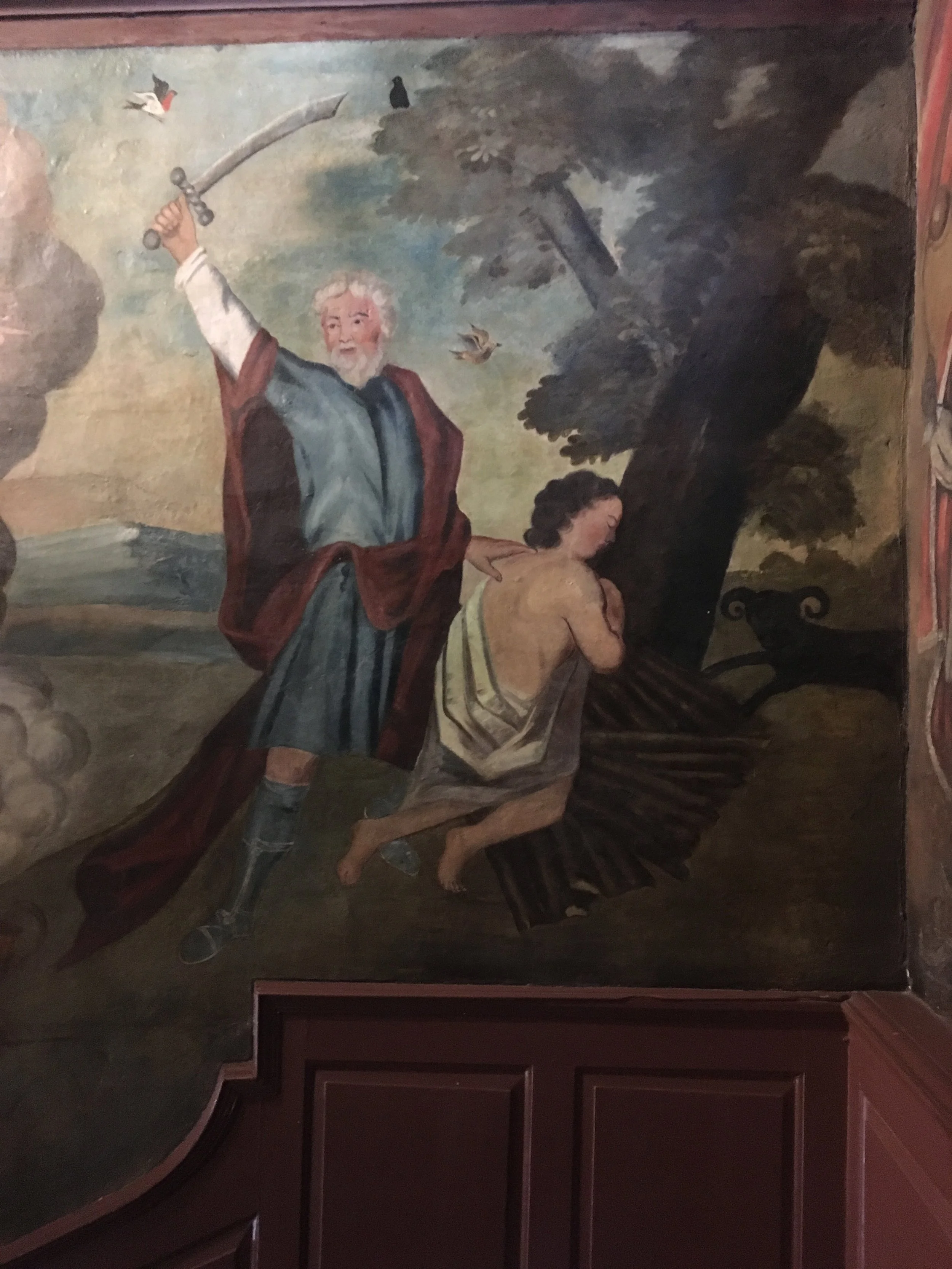
Issac and Abraham
There are clear source materials for the mural of Issac & Abraham that Nehamiah Patridge must have used for his version. Several 16th and 17th century paintings exist that have strong resemblances to our mural, including those by Dutch, Italian, and French painters. Buy why did Macpheadris include this biblical verse on his walls? It was certainly an important verse to him. Did he see his father’s death as a sacrifice to save him and his brothers?
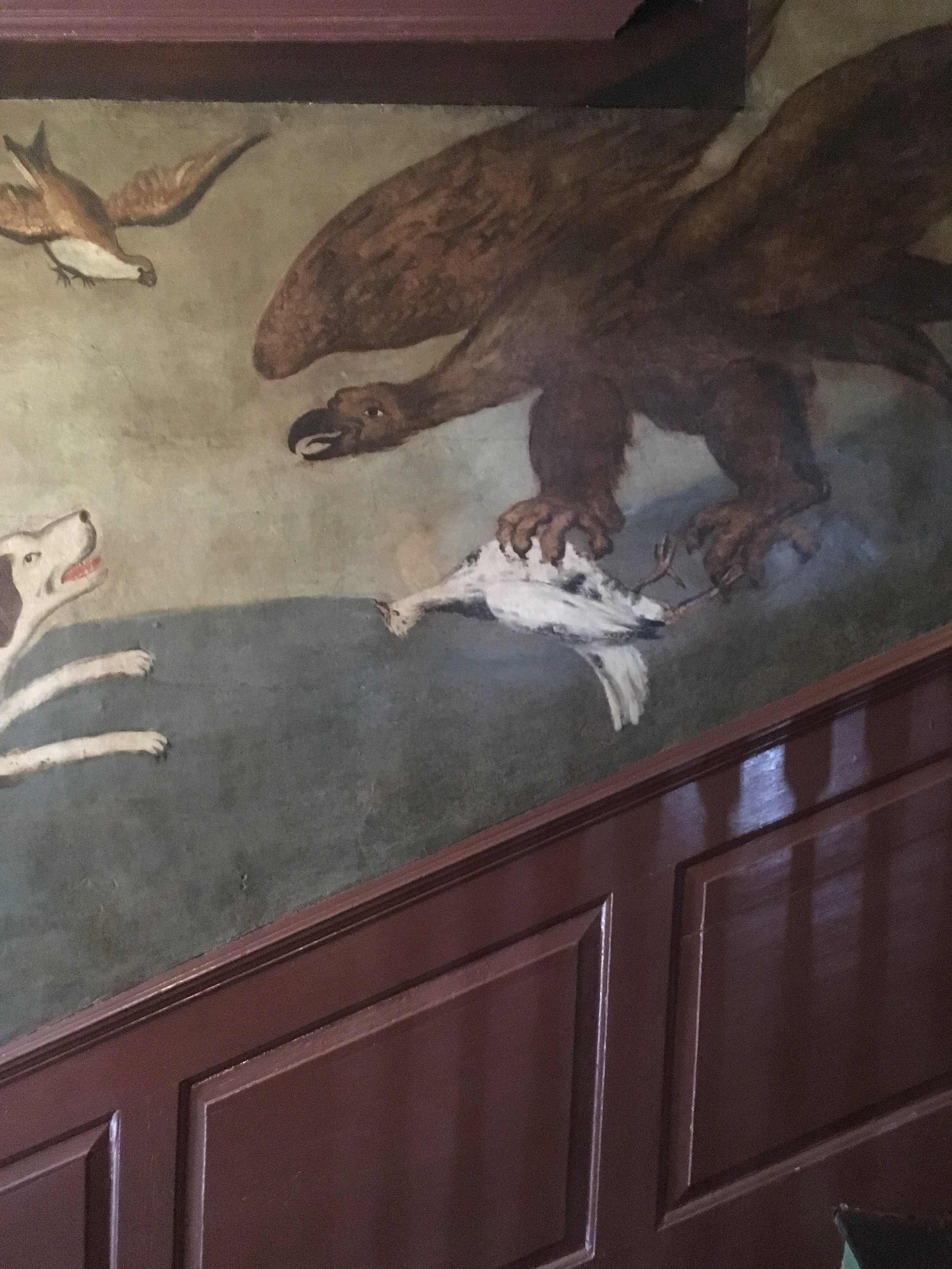
The Eagle and the Chicken and the Barking Dog
These are a bit more of a mystery. Dave Pepson has researched popular late 17th century art, and found that King William (Macpheadris’ hero), favored the Dutch painter Melchior d'Hondecoeter, who primarily painted animals and wildlife. One of his paintings is titled Eagle Attaching a Chicken. Thus, this mural could represent a further tribute to King William III.
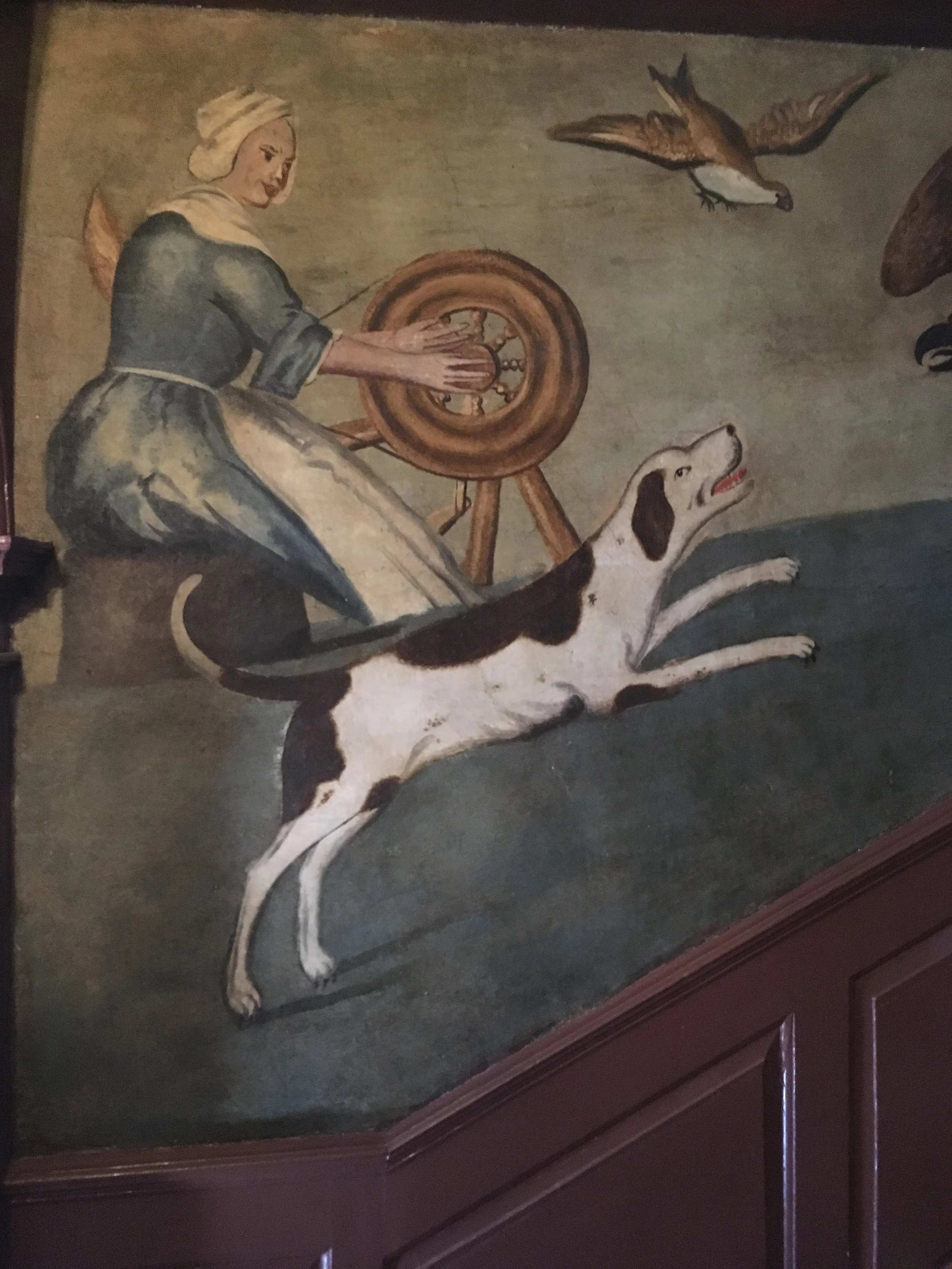
Woman with her Spinning Wheel
In the 1700's, a woman spinning flax was very symbolic of Ulster, Macpheadris’ homeland. He maintained a close relationship with his fellow countrymen long after the Siege of Derry and immigrating to the American Colonies. Not long before the murals were painted, we have letters from Macpheadris to his contacts in Ulster, offering large land purchases (up to 100 acres) for very favorable prices. Numerous people suffered greatly on arrival and it’s possible this mural was painted as a tribute to his fellow countrymen - with a heritage of endurance and unyielding resolve.
Dramatic, grand, impressive, colorful, mysterious—the murals are an excellent example of colonial folk art, an incredible tribute by a self-made man, and many consider them the most outstanding feature of the Warner House.